I am holding a party to celebrate the birthday of an acquaintance who for some reason is a half-completed Sudoko grid. Only problem is, the party is entirely virtual, taking place in a small corner of the website Common Errors in English. Also, the only attendees are a potted vine, Peter Allen and half the cast of March of the Penguins. The words "Not for Resale" maintain a powerful presence. There are no shadows on the internet.
 To unpack today's significance-loaded dream, we all welcome our special guest Sigmund Freud! Hi Dr Freud!
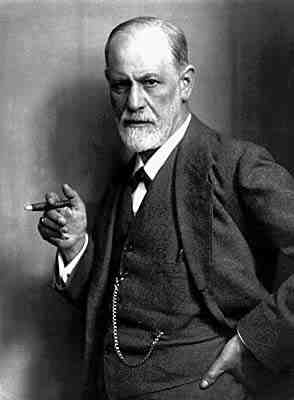
Don't you wish your analyst was hot like me? Don't you wish your analyst was a freak like me?
...
...
...
Doncha? Doncha?
I sure do. So what's the story with my dream, man?
Well firstly, and I shouldn't need to say this, but it's clear you've been eating a lot of heavy foods including cheese late at night before bed. Am I correct? I believe I am. And I certainly shouldn't need to lecture you on the dangers of carb-loading after 5pm. But as for the actual content of your fantasy, I believe that a certain level of repressed libidinal energy supplies its motivation. Let us look beyond the surface and explore this.
This party is transparently some kind of event at the Comedy Festival, one held by someone with whom you are familiar. It is one which appeals to the intellect, yes, but also plays with language and offers an unreal mental space within which to imagine oneself. "Not for Resale" obviously indicates the way that comedy does not often work when jokes are retold by non-comedians. For instance, despite it's obvious inherent humour, I can never seem to raise a laugh when I tell the story of how a hausfrau enters a butcher's establishment and complains that the bratwurst she has purchased is largely composed of meat, but the ends are stuffed with straw. The butcher comically replies that the middle of the item is is relatively easy to produce, but that "it is hard to make ends meat". This is the end of the joke.
In one of my many writings, I have theorised that laughter is almost always provoked when we witness a character acting mechanically, whether it be in his or her actions or his or her speech or mental behaviour. It is for this reason that the robot dance is humorous, but also why so many situation comedies make us laugh violently, because we are witnessing people responding in mechanical ways to situations that require them to adapt alternative responses. This is a theme taken up and extended by Henri Bergson, the thieving swine.
We seem to be wandering here a bit, Sig.
So be it. I am long dead. And all that one hears in the afterlife is the music of the Pussycat Dolls.
I see.
To return to your initial question, your dream tells us of American comedian Arj Barker. His is a witty and wry series of comic routines which appear lazily delivered but unfold as complex and carefully-constructed brainteasers. Also, he is a very sexy man and you clearly have sublimated some kind of man crush.
I think that'll end things for today thanks, Sigmund. Though I still don't understand the whole penguins etc deal.
That would be the carbs, dude.
Got ya.



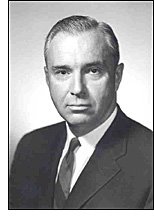



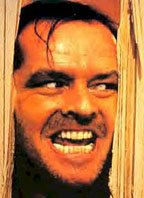
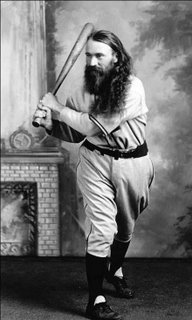
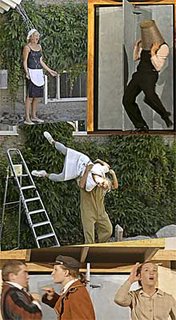



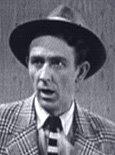

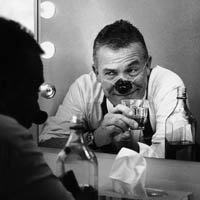

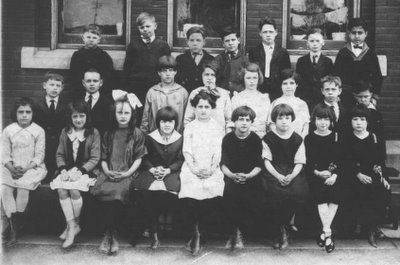 I was absent this day, oddly enough. I think I had a bad case of quinsy that day, but it could equally have been a dose of scrumpox or Bronze John. I was a veritable treasure trove of archaic ailments, all once common but oddly lacking from contemporary medical dictionaries. In less than three years in my youth, I managed to suffer from trench mouth, La Grippe, grocer's itch, croup, bloody sweat, dock fever, dropsy of the brain and many good old bouts of the horrors.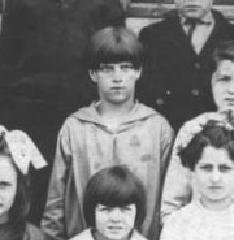
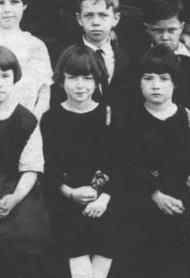
 Ah, Jemima. Paler than most, on account of an anaemic disposition which was eventually to be the end of her, she also saw a wasting of the brain which had many side effects. You can see here the tea towel she always insisted be draped across her head at a jaunty angle. She insisted it would come into fashion but I don't think it ever took off.
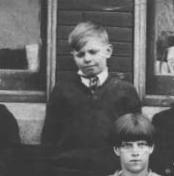
 Beatrice here was quite the character. She always insisted that she was in fact a well-known gossip columnist for the New York Times, and suffered the humiliation of our derision and scorn at these outrageous claims. But what do you know? It turns out that when this photo was taken, Betty was in fact 43 years old and one of the most talked-about writers at that esteemed publication. We never could understand what she was doing in our class, but suspect a kind of Fast Times at Ridgemont High undercover deal.
  Hmm. Now this might seem a bit distasteful for modern audiences, but you have to understand that we did things differently then. Nowadays, with access to modern medical facilities and vaccines and so on, it's hard to remember what it was like in the grip of a depression with no such things as antibiotics, regular meals or even clean water. But we stuck together. So gasp if you will, but I think it was right that we included Eric in our school shot, even if he had been dead for seven weeks. I mean, we kept him in class that whole time. After all, his parents had paid his tuition in full.
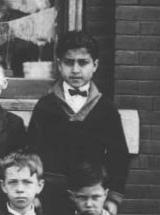 This is our teacher, Mr Singh. In retrospect, I do question the wisdom of employing a twelve year old Indian boy as our teach, but he arrived with very good references which included time spent teaching at Princeton, Harvard and MIT. The teaching staff was limited, and they could use all the help they could get. Also, Mr Singh's teaching style was pretty much limited to throwing paper planes at us, taking our lunches and starting singalongs (with songs we never knew the words to).
 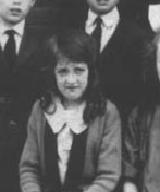 Gretel may be confusing to you younger folk. You see, back in the day, it wasn't uncommon for actual fairy folk to sign up for class. In this case, Gretel was a bridge troll. I don't know what she ended up doing, but then I haven't been back to Crook Neck for some time.
 Young Angus Cerini's This Thousand Years I Shall Not Weep finished up last night at The Store Room and, well, it was quite the corker. I hadn't seen Angus perform for a few years (probably not since Uni, even) so I was looking forward to catching it. Solo show devised in collaboration with Kelly Ryall on sound, it was a barrage of sucker punches that didn't necessarily make sense but kept you intrigued the whole time. It told a few intercut stories, one of a "peacekeeper" in Iraq who commits an atrocity, another of an anaemic kid who is given a disease during a routine blood transfusion, and a framing device wherein a politician makes some broad claims which set the rest of the show in contrast.
 Look in the bottom right corner of the frame: