Monday, October 09, 2006

No Sleep till Dalby (pt 7)


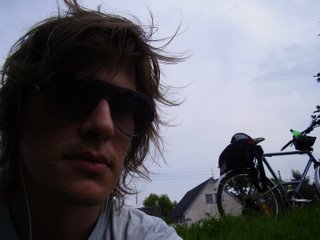
My wardrobe’s lycra-quotient is zero. I’ve never scoured the classifieds for a position labelled "freak willing to cycle the length of Denmark pursued by inner demons." Did it, but. If you’re not the sort predisposed to find value in cycling tour diaries, perhaps the presence of ass-paddlings and/or tight jeans will change that. Perhaps not.

Did I really feel it appropriate to cycle the length of a country in rolled-up stovepipes, $2 sunglasses that folded up to pocket size and a tee screaming "Who loves Burritos!"? I’ll never tell.


If I ever run into God in a pet store or Ticketmaster7 outlet or motocross rally or wherever, I think the first thing I’d say is "Hey! You probably hear this all the time, but I’m a real fan of your early work."
But I’m pretty sure in God’s workshop there’s a corkboard with a note on it saying something like "DON’T FORGET – FINISH DENMARK (it looks rubbish!)" And over the millennia, the memo has been covered with all sorts of other post-its and party invites ("ladies, please bring a plateaux!") and God never did get around to touching up Denmark. A few structural refinements would have been nice.

Like mountains. Mountains are smooth (if obvious) manoeuvres. They’re like God’s jazz-hands. Cheap and gimmicky, the ole razzle-dazzle, but hey: mountains, man.

There are no mountains in Denmark, not a one. I saw a few hills with delusions of grandeur, but they’re dreaming. The highest point is 173m above sea level. The annual death toll for persons falling off cliffs is only 0.2, compared to the whopping 18 Australians who die every year from the mountainous fatalities which I just made up. Needless to say, riding a bike across Denmark isn’t like climbing Everest.
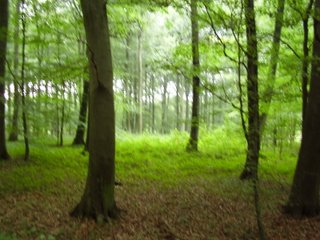
But rural Denmark wasted no time at all in letting me know that it was a boring place. I guess I have to respect that, since it didn’t offer the pretence of something interesting around the next corner. No, it took about 20 minutes to realise that it wasn’t getting better. Don’t get me wrong: I’m deeply in love with Denmark and want to live in your wonderfully friendly country for many decades. But do some terraforming, please. I totally know a canyon going for a sweet deal. That said, if empty wheat fields are your ‘thing’, you’ll probably get your dollar’s worth from a trip like this. I guess I saw a few trees too.

After enjoying the pleasures of a day riding across Denmark I feel qualified, nay compelled, to state that said day would have been infinitely improved if it hadn’t required a bicycle to be involved in any important aspect of the trip. The journey from Copenhagen to Dalby was like an eight hour behind-paddling from an over-enthusiastic prefect at an English boarding school in the 1930s. I think I violated a number of United Nations treaties on myself during the trip. That wasn’t the worst part of the ride, but it was the part that would probably most easily bring that bitter-beer wince to your face, so I thought I’d start with that.
I begin the ride aiming for Koge, a little seaside town around 20kms out of Copenhagen. It looks doable, and I decide to try and make it by nightfall. I make it by 2pm, which sort of throws my plans out. What now? Might just keep on riding. See how far I do get by nightfall.

And so I do. Just keep on riding. Occasional stops for a cigarette, or to pop into a petrol station for something to eat. It’s worth noting that petrol stations in Denmark don’t have anything for a vegetarian to eat, not even a plastic salad sandwich. I don’t eat for the entire ride (I down a lot of unpronounceable fizzy drinks, though).
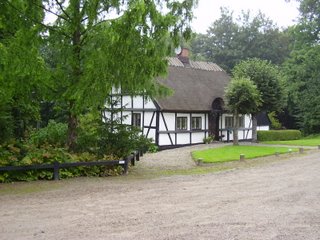
This lack of food, combined with endless hours of pushing on down deserted country highways, past quaint farmhouses and lowing cows, up rickety hills and down ancient, winding lanes, knocked my brain about a bit. An hour after Koge, I was deep in the country. The ‘towns’ I passed through consisted of a petrol station and maybe four-five houses. That was usually it. There’d be a car every ten or twenty minutes, but I otherwise rarely saw a human being. I just kept on, burning up in the hazy sun, drenched in perspiration and aching all over.


About six hours in, I wasn’t thinking much. I had the funny idea that if I maintained the rate I was going at, I would probably hit the south coast of Zealand by about 10 or 11pm. In fact, I’d complete my entire ride by lunch the next day, rather than the three or four days I’d given myself.
A little after this, I was passing a cobbled side road and noticed a figure not far down it. It was bent double, as if tying its shoes. From the waist down, entirely white. Waist up, entirely black, including its head, and kind of fuzzy-looking. I stared, and couldn’t make out how it could be human, though it had a human-kind of shape. But it looked more like some kind of Danish rural creature from a fairy tale, some mythical thing that you’d never see when you were in a normal state of mind.

And I thought: Oh boy! I’ve just lost my mind.

I should have seen that one signposted by the looks every petrol station attendant gave me when they saw me pull up on my squeaky velocipede. They gave me the glazed stare I’d expect if I’d been wearing a tee-shirt with "I’m biking my way through personal crises!" iron-printed across the front. In short, they were short.
I knew during this period that the real reward I was gaining was the pleasant memories I’d be fondly recollecting for about eight minutes after the trip was over, and this was enough to keep me soldiering on, though I was more like the soldier who runs crying and blabbering incoherently through the undergrowth in any direction but the one the colonel has ordered. I’ll admit it: I was a pitiful skid-mark on the toilet bowl of humanity, a dangling booger bringing an embarrassed rictus to the face of every Danish commuter zooming past towards the north. I’m amazed some Dogme-appreciating father of four didn’t ‘accidentally’ hiccup and cause his 7-seater to swerve across a few lanes to put his fender through my grill ("A hit, a palpable hit!" cries a child! "A mercy killing" he tells his traumatised daughters, "the thing was already halfway to Copenheaven, really.")

Such terrible thoughts. To be or not to be.
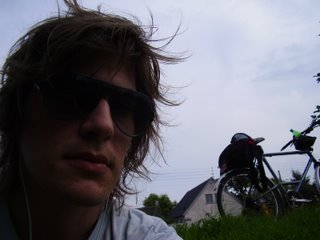


For years I’ve had the whole Haunted Man shtick going on, thinking I’d earned a Nam-style thousand-yard stare caused by the recollections of the things I’ve seen ("We were just babies, dammit, and they sent us into a warzone!") But really, I was just a dumb schlubb (or is it schmuck?) who thought that people gave a crap what crappin’ crap makes up your crappin’ history, when people usually have their own crap to deal with. That was the real lesson Denmark taught me, when Haunted Man had his ass kicked by Broken Man. Had his ass kicked so bad I’m surprised I didn’t have to sleep standing up.

Getting Broken can be the best thing you ever do, if you’re a self-pitying fool like me. Reduced to nothing, just a husk running on autopilot, almost at the animal stage, so tired that actual thought is barely even possible, well, it can open up new perspectives, put things in order. It’s not that you make better sense of things; the opposite, really. You stop trying to make sense of anything, and just accept all the stuff you’ve got no control over. It’s the same sort of state people aim for with extreme sports, or getting completely wasted, or marathon meditation sessions, or starving themselves. You empty out the human and hand the reins over to the reptilian part of your brain leftover from the old days. You wouldn’t really want to stay like this forever, but the occasional visit can be an eye-opener.

I was so Broken that all I could do, eventually, was ride. So Broken that after an hour of wondering about that funny bump the back wheel of my bike was giving me, I finally summoned the mental energy to turn around and have a look. I’d been riding on a completely flat tyre for an hour. It was time to stop. The next town was about five kilometres away, so I coasted down hills and walked the bike up them until I got there. The town, as usual, was just a petrol station. The attendant politely informed me that yes, there was somewhere to stay nearby, about five kilometres back the way I’d come. So I walked the hour back along the route I’d just taken, and as darkness fell found myself at the Dalby Hotel.
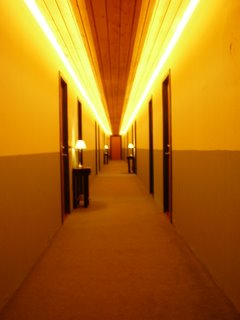


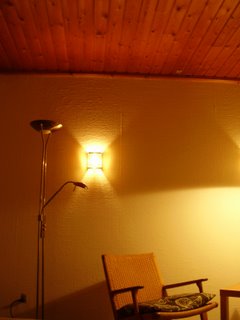
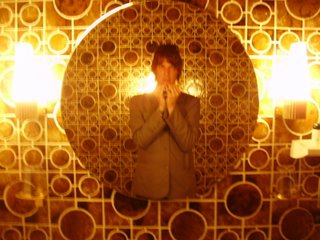
Thinking back, I wonder if the Dalby Hotel even existed. Perhaps I just slept in a field and imagined the place. Certainly, it was the weirdest place I’ve ever been. It was as if Stanley Kubrick had designed it for The Shining 2: Death Comes to Denmark. Long, empty corridors, wood panelling everywhere, a low and omnipresent hum, and not a soul to be found. If a wall of blood suddenly erupted from behind one of the closed doors, I wouldn’t have blinked.

I wandered for a long time before I found the concierge, who stared at me blankly as I asked if there was a room available. He spun the check-in register around and I filled out my details. I’m so happy I found this place, I tell him. I’ve just ridden a bike from Copenhagen. His face is still devoid of all expression. Seconds pass.

"That’s a long way," he says.

Yes, yes it is. Good night Dalby.

Thursday, October 05, 2006

Just Copen (pt 6)

Seeing as how the travel posts have been unfurling unstoppably like a roll of toilet paper across the bathroom floor, I may as well give in and try to unravel them all as quickly as I can. I should say, however, that I didn't get many charming shots of Copenhagen since I had nowhere to recharge my cameras batteries (campsite: remember?) and since a lot of European cities look quite similar in photos, I'll save the architecture for later. Today, alongside the text, I'll post some lovely images of people pretending to be Scandinavian instead. I can do that because I consider myself a pretend Scandinavian, too. I am the Scandy Man, and the Scandy Man can, as the song goes.


Our old friend Saint Augustine tells me that “Life is a book; not to travel is to read only one page.” Augie’s modern day equivalent, Oprah, gives us contrary advice: “Wherever you go, there you are.” I don’t know who is right, and today I was wondering which side I’m on. Does travel change us, expand us, make us more? Or do we carry our bags at all times, every new destination only reflecting where we’ve come from?


Talking to Darko last night, I learnt that he’s studying psychoanalysis, which was interesting as I’d never met someone who was accredited in that field and also because the guy next to us had a drink gaffer-taped to his hand and a chair taped to his leg, which begged interpretation from some kind of professional or at least exuberant Montenegro guy who was on his way there. I asked Darko the obvious question, given the company he kept and the past he’d had (not much fun, to put it blunt-wise): you’re doing it to understand yourself, right? He laughed (which, typically, made the table shake, plaster fall from the ceiling and old people in nearby apartments cross themselves and whisper prayers to the Lord) and nodded, going further to argue that every conversation with another person is just a chat with ourselves.


But if that’s the case, I’m back to the same old question: why am I here? Don’t get me wrong. I’m not asking this in the manner of some old guy who spends as much time as he can sitting in his ’83 120Y listening to Yes and wondering how he went from a go-getter who possessed what is known as “potential” to a mortgage-saddled burnout trying to raise a blended family while doing his best to avoid them. I mean, sure, I’m an embarrassing husk of what I might have once been. But I’m still doing ok. The reason I was thinking along these lines today was simple. In hungover agony, I started pondering the routines I fall into, the rituals that tell me who I am. No, I’m not going to detail any here since that’s none of your business, but I suppose putting yourself in a strange environment throws those patterns into relief, makes you wonder why you react to something in a certain way and not another.


Let’s take another philosophical position: to be is to do. We don’t arrive at our selves fully formed, but continually produce who we are by the way we act, and the way we react. Of course, you can argue that we don’t have that much choice – how we act is often conditioned by other factors. But once you realise a constant to your personality, once you’re aware of it, you suddenly do have that choice, since to continue to act that way is no longer something unconscious. Maybe that’s what travelling can offer: the chance to change. Maybe not.
Switching gears, or perhaps just coasting for a while: If we are what we do, I understand why I like Copenhagen so much. It’s the bikes. It’s most definitely the bikes. Words can’t really do justice to their ubiquity. I cannot recall, in all my time here, a moment when a cyclist wasn’t in view. Moreover, from anywhere I’ve been there has always been at least a dozen parked bikes visible. Everyone rides, everywhere, and it’s probably why everyone seems so damned fit. They’re not the cycle freaks of most countries, pedalling determinedly in lycra and fierce scowl; businessmen, pensioners, supermodels and ferals all rub elbows in the bike lanes that border every roadway.
If there’s one piece of advice I’d give any traveller, anywhere (except, perhaps, London, where traffic is lethal) it’s to buy a bike. It’s not just the fact that an entire city becomes convenient, any destination just a few pedals away. It’s the unique mode of perception made available. You get to see vastly more of your environment, without removing yourself from it. You’re still in the streets that you ride, but can skip the boring bits. In a car or bus or train, the panorama unfolds like a TV screen. Riding around a strange city is less like TV, and more like being really cool in a cool place with people who think you’re cool. Not exactly, but it feels like it (cool). Riding a bike is fleshy, corporeal. And when it comes to Copenhagen, it’s terribly cute.


In Malmö, another bike city, I saw an older woman telling off a young cyclist in corporate attire for talking on her mobile while riding. In Copenhagen, riding while talking is very common, and unremarked upon. I don’t know what the distinction means, but it feels like something.
Both cities have one thing in common, though: European wasps hovering over every bin. I guess it’s Europe, after all.

My last night in this city I’ve grown to love ends on a strange note. When I return to the campsite at around 11pm, I notice a row of candles leading up the hill to the site restaurant (yes, they have a restaurant. While I’m drowning in a sodden tent, the camper van crowd is living it up on Tuborg and saganaki). I realise that I haven’t seen the campsite at night, so this might be a regular thing, but I wander up the steps anyway. I pass the restaurant and head for the beach, avoiding the couples dotting the shore. They’re murmuring quietly on benches, and I can’t help but think how camping is connected to whispers, furtive sounds slipping out from canvas and zippers to only hint at what’s going on inside. Camping is stealth, cunning and disgraceful.


I wander down to the two piers which jut out fifty metres or so onto the water. The first had a white-clad garble of figures vaguely discernible at its end, a romance-ridden couple, probably, so I keep on till the second quay and tread the creaking boards. Near its terminus, I sit down and look out at the lights of the city in the distance, and the foggy grey of the horizon. A smudge of light, only visible at the peripheries of vision, might be Malmö. Boats are sprinkled along the horizon, betrayed by tiny safety torches.
Then I hear him. It’s not a couple on the other pier, but a man on his own. He is visible as a vague silhouette, kneeling. He is singing.
It’s a devotional song in Arabic, a Muslim prayer directed out across the ocean. His chorus is the birdlife quacking and squealing at irregular intervals and the steady lapping of waves against pylons.
His song is the most beautiful thing I’ve heard on this trip, and I feel like I’m his sole audience member. The passion with which he sings is audible in the occasional cracks in his voice, not flaws but fault-lines suggesting a tectonic, heaving faith. There’s a gradual rise in volume, until he almost seems to be crying his song. After 20 minutes he hobbles to his feet and staggers off. A drunken prayer, perhaps. Still a beautiful thing.

Time to leg it from this joint. This morning was an exercise in disaster, to overstate the case (as is my wont). I hadn’t banked on summer nights in Denmark hitting freezing point, and so I spent the night in my tent shivering, sleepless, wearing every item of clothing I’d brought for the trip and serenaded by the chatter of my own teeth. When I got up at sunrise (not woke up, since I hadn’t gotten a wink, but literally just stood up to see if sunlight meant warmth, and to separate night from day) my troubles, well, continued. I bought a bottle of orange juice from a supermarket and took a big swig. Thus discovering that I’d bought a bottle of orange cordial. I dropped my iPod in a puddle. I decided to ride the 40kms to Koge on a rusty bike with one brake, a backside and spine nearing breaking point, a pocketful of krone and a heartful of optimism. Care to join me?

Wednesday, October 04, 2006

Conditioned (pt 5)

Copenhagen. I will learn to love this kind-hearted and cheeky colossus. I’ve only been here 30 minutes and I feel at home. It’s not the prettiest city, sure, but it’s got moxie. I’m sitting in a café surrounded by unassumingly cool kids with laptops and lattes browsing the creased old novels set in bookshelves below the bar (pulp romance, detective or sci-fi, mostly). They (the patrons, not the books) spill onto the street where bicycles whirr by incessantly. A sultry Danish folk singer croons from the stereo. And it looks like the sun is about to come out.


The best part of the Laundromat Café (probably a novel name in Danish) is what gives it its title: the tiny red-walled room at the back which houses a row of modern washing machines and a couple of gleaming steel dryers. Coming from Malmö, I’m in heaven.
Malmö has no laundromats, no public washing facilities, and no substitutes in the hostels, ya see. In an unrelated coincidence, I arrived in town with no clean clothes. Every residence in Malmö, I’m told, has its own machines in the basement, so there’s simply no call for a Laundromat. I can go to a dry cleaners, the hostel owner hopefully suggests. Yeah. I’ll be getting my underwear chemically cleaned and steam-pressed, because my name is Jean Claude Van Damme and my unmentionables are worth more than pressed gold and I’m incognito for a film here in Sweden based on the true story of an expensive underwear-wearing cyclist who battled his demons while doing the splits on a cheap rented bike. That’s why I’m here at your hostel. I hear it has splits-friendly facilities. Oh, and a pool table.
The Malmö clothes-cleaning crisis was a blow, and last night I was out wearing a crumpled, unironed shirt which I found near the bottom of my bag, and a pair of jeans and a jacket which I literally doused in aftershave before daring to brave the streets. Maybe this contributed to my minor malaise; dirty, running on an average of 3 hours sleep since arriving in Europe, and feeling like a bedraggled stranger in a strange land. Now I’m rested, washed and cheerful. God bless Copenhagen. God bless the Laundromat Café.

Well, you’re back. Now, where did I leave you? Ah yes, Copenhagen. The city has only gotten better. While my time in Malmö was defined by solitude, the opposite has been the case in Copenhagen. In my first 24 hours, I met dozens of people – people who’d approached me, stopped me, dragged me onto a dancefloor or into a bar. Nice change, this.


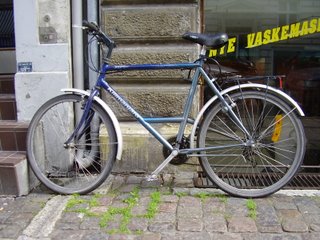
Meet The Bike. It might not look like much, and that’s because it isn’t much. In fact, since it was the Cheapest Bike in Copenhagen, I don’t think I’m out of line in dubbing it the Worst Bike in Copenhagen. Still, I’m sure we’ll have lots of odd-couple adventures, knocking over apple carts and being chased by fist-waving cheese vendors.


In case I haven’t mentioned it yet, I bought the bike so I could ride down the length of Denmark to the Southern coast, where I’ll jump on a ferry to Germany. Why not, I say. And to add to this completely frivolous decision to camp out in a one-man tent while here, and I just know what you’re thinking: Oh Boy! He’s going insane again.
But that was later. Dalby. We'll get there.
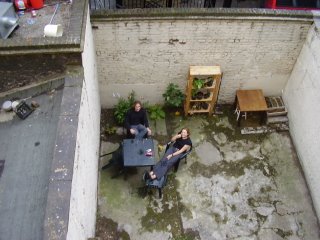

Shortly after I’d done my laundry I saddled up the bike and headed for the camping ground. At this point, the heavens opened up and I stayed drenched for the next six or seven hours. Pitching a tent in driving rain is nasty business, especially if you’re trying to shield two bags from the elements. It’s even worse if you have no idea how to construct the thing.
Luckily, as I stood huddled in a tiny alcove (a remnant of the 1880s fort the site is built upon) and pondered my problem, a Danish man walking past offered to keep my bags in his large tent while I set up. I took up the offer and he introduced himself as Stig, while his ‘travelling companion’, a firm-looking youger guy from Poland, served up steaming coffee from a thermos. When the rain let up a little, we turned to the task of tent-up-putting, though the other guys were as baffled as I was when came to the assembly process. An hour or so later, it was mostly up. A bit saggy, and filled with water, but workable.


I badly needed warmth, civilisation and a drink after the horror, so I thanked my new friends and headed back into town.
It wasn’t long before I met Darko. I was sitting alone at a bar when he approached me and told me he was happy for me to join him and his friends. I’d noticed them on the way in; a noisy, motley lot, mostly young and attractive and energetic. I should have guessed that they were a hospitality crowd; the staff of the bar itself, in fact, sending off one of their own in a typically rowdy fashion. Ethan was an Australian and after eight months here was off to Melbourne again. The others were mostly Danish, with exceptions.
Exceptions like Darko. At 38, he was older, and hailed from Montenegro. He was unnervingly vivacious, with a booming voice and animated features. He’d clap a bear-like hand on your shoulder to emphasise a point, then bounce back in his seat laughing wildly. He didn’t work at the bar, but I could tell he made friends wherever he went. I guessed I was one now, too.
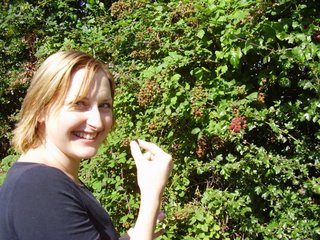
When the bar closed, we were shuttled around the corner, a solid mass guided by unknown forces. We found ourselves in Rust, where Darko managed to fast-talk us past the long and unmoving queue. Inside, the crowd was big and beautiful. Copenhagen knows how to party. But if the daytime Danish are friendly, it’s amplified after a few drinks. More than once I’d feel a tug on my sleeve or a call from a nearby booth as a local struck up a conversation with me. Confronted with a reel of Danish, I’d have to respond with an I-don’t-speak-Danish apology. And just off the boat (or train) my first reply was an I-don’t-speak-Swedish, which was fine since the woman I was talking to didn’t either. But it’s unsettling to feel welcome when you’re travelling blind. Enjoyably so.
It’s probably not right to characterise the city as an especially open and friendly one. The people don’t seem that different to those I encountered in Malmö. There are just as many curt workers, and couples in cafes who’ll politely answer questions but won’t welcome you into their homes. I don’t think Copenhagen is necessarily the most amicable place around, but it sets up the conditions for friendliness. People don’t drive as much; they glide around on bicycles, which are a far more sociable form of transport. Diners and streetside café tables line the roads and laneways. There are spaces to encounter someone everywhere you turn (I’m talking about the areas just outside of the city centre, at least – the centre seems colder). In Copenhagen, it’s just possible that you can go out for a quiet drink on your first night in town, and go stumbling back to your bed as the dawn begins to sweep across the sky.
Though in my case, that bed was a tent still filled with water. Not the best end to a night, but an end, nonetheless.

Tuesday, October 03, 2006

The Odd Stranger (pt 4)

Did you ever have that thing at school where you accidentally called the teacher "mum"? All the other kids laugh and it's embarrassing. It's way worse when you call someone else "mum" though. Like that police officer. Or the magistrate. Or your cellmate, Frankie. I usually find the best way out of these is the tragic route: pause, and follow up with "I never knew my real mother". Don't say that to your real mother, though.


I don’t think I ever knew the real Malmö, Frankie. Malmö isn’t a city that rewards the lonely. Some places do. Paris is the city of lurve, but the flipside of this is that being lonely becomes an integral aspect of any visit to the place. We can never measure up to the romance of Paris, and the city is wonderfully, gorgeously deliberate about this disappointment. Berlin subsumes loneliness, making us aware of the smallness of our suffering and the inconsequential nature of a brief moment without friends or loved ones, before cheering us up with all the other things invented to stave off despair.
Malmö does none of these. If anything, it reminds me of London on a miniscule scale. It offers polite indifference to my miserable solitude. It recognises me with a clenched-teeth smile. I don’t think I should have come here alone. Sure, it’s a pretty city, and its inhabitants are obscenely beautiful in a way that I, as an Australian, can’t begin to comprehend. And its name obviously throws a bone to all those hardcore umlaut fans. I’ve often thought Melbourne’s loss of “most liveable city” status was largely due to its lack of umlaut action. But all of Malmö’s loveliness only makes things worse.

I did have my photo taken for a Swedish magazine. Being forced to recite the labels of the clothes I was wearing was a humbling experience, mainly because I had to check each label as we went along. The journos were lovely kids, though.


The most meaningful human contact I have here is with an old man at a table outside a nondescript pub. I’ve hit a minor crisis point, having covered much of the city on foot and not finding a toehold anywhere. I’ve exhausted my mental resources trying to find a way into the city, and been saddened to discover that all said mental resources could come up with is the purchase of this miserable dessert pizza slathered in cream and Spanish onion. The look on the face of this woman says it all.


Good times, good times. So I just stop, and sit down at an outside table. The old man at the next one along says something to me in a good-natured way and I gesture to him my lack of Swedish (I can’t describe this gesture, but it’s kind of like the “no speaka English” shrug which was rightfully banished from the Australian comic repertoire around 1991). He idles over and asks where I’m from. He knows Australia; this I gather from his battered English. His friend’s brother’s girlfriend lives there. In a big city, like Stockholm.
He’s a nice guy, in a sodden, standoffish way. Even the drunks here, it seems, are defined by a politely distant formality. It’s not the distance I saw in others who stopped to chat with the guy – they offered the tight-lipped curt blokeiness I recognise from home, the carefully macho pose outlined with quick nods and regular silences which reminds the listener that the conversation isn’t too close, and can be terminated at any time. Old drunks are often granted familiarity, comrade-status, but are rarely allowed to think they’re anyone’s friend. I guess I shouldn’t characterise him as an old drunk. I have no idea of his age.
When I begin to inquire about this man’s story, he tells me that his father’s brother is the richest man in the world, and that I must have heard of him. I nod, though the name he gives me is nothing like Bill Gates or the Sultan of Brunei or whoever’s pouting from the cover of Forbes these days. I ask if my new drinking partner is from Malmö and he shakes his head before informing me that his mother’s mother is Astrid Lindgren. This is a name that I do know, and will get to know better in the next half hour. He tells me a lot about Astrid. How her novels such as Pippi Longstocking (or Pippi Långstrump, as she’s known here) were the greatest fantasies the world has ever known; of her time as a teacher in the DDR; of the award she received in those years in Moscow; how she was never a socialist and how no one knew her age when she died in 2002 (if she really died, he cryptically adds). This is interesting, but every time I try to steer the conversation back to his own life, I’m met with a blank stare, even a jolt. Each time, he bounces back with more details of Astrid’s life, non sequiturs all.


Something smells fishy here, and I ain’t talking about Astrid’s recipe for Gravlax Surprise (note: gravlax is literally translated as “entombed salmon.” For what it’s worth). I have no idea if he was really related to her or if he just knew a lot about her. What did hit me, though, and leave me with a terrible ache, was the way he seemed to be filling some void with these stories, unwilling to talk of his own life, only throwing random facts of another person’s history forward at whomever would listen. And the pain came not from pity, but recognition, since this is a lot of what I do for a living. I don’t know anything about the guy, really, but I imagine him staving off a monstrous loneliness in Malmö by trying to create some kind of narrative which will give him a place within it. And all he is met with by all is indifference.

Hey Frankie, did you ever watch Battle of the Planets when you was a kid? Now that was a good show. Every time that came on I’d go abso-freakin’-apeshit (on the inside). But what really got me, years later, is finding out the truth about the cartoon. It turns out that it was an American edit of a Japanese show called Kagaku ninja tai Gatchaman. Not just an edit, really: the US version took the footage and remixed it to create an entirely different story, more suitable for Western audiences. The whole “planets” deal, for starters. The original didn’t feature any space travel, for instance, which is why BotP featured excursions to strange remote worlds which looked suspiciously like Earth. More bizarrely, the character of Keyop, known for his creepy Tourettes-style verbal tics and nonsensical vocal eruptions, was completely different to the original, in which he made total (if sometimes profane) sense. And of course there’s arch-nemesis Zoltar: in Gatchaman the villain was a hermaphrodite, but in the US the character became two completely different villains, so as not to confuse the poor kiddies or their bible-belted parents.

Where was I going with this? Oh yeah. It’s just that sometimes I think that writing about yourself is like watching an episode of this show. The amount of editing that goes on, and the fact that you’re second-guessing your audience, well, you’ve walked a mile in your own shoes and there’s no way you want to foist those stinky old goobers onto someone else. So you pretty it up, make with the funny and possibly add interstellar travel as a major structural component, even if it doesn’t quite add up. You might be depressed in Malmö, but nobody wants to hear about that, so you splice some Astrid Lindgren into your footage and try to cover up the seams.

Dang, he’s gone off to sleep right when I was gettin’ to the good bit. That ain’t like Frankie.

So, obviously, it’s really me I’m writing about here. And of course, it probably helps when Lindgren Jr. does find the odd stranger willing to listen to his story for a little while, so thank you too, reader.
Hey, did I mention how ridiculously good-looking everyone is here?

Sunday, October 01, 2006

Giraffes, maybe (pt 3)

Ask me why I’m here. Go on, I dares ya. Not why I’m here on earth (I explained that in the last post, but short answer: co-inkydink). Not why I’m typing this up (short answer: none of my friends want ta hear about my holiday). And not why I’m overseas to begin with; Macaw and Starling’s wedding was two days ago, though, and now I’m dry-retching my way through the world’s worst coffee on a 6.50am flight to Sweden. So why am I here, and not back in London with the rest of my friends?


The wedding went off without a hitch, apart from the obvious one. Dove and I met up with Mockingbird in London, grabbed Dove’s old housemate Kite (now a UK res) and drove across England in a rental car, pausing to navigate the dangerously non-linear geography of Bristol to pick up a travel-hardened Drake before heading into the rolling hills and dales and glens and fens and heaths and copses and other topological forms which make Somerset so beautiful. Which it truly is, as was apparent from the first moments spent speeding through the countryside.


The winding roads are charmingly narrow, almost always bordered on both sides by ancient stone walls, thick hedgerows or abrupt drops. There are no pavements and indeed no hard shoulders along most of the roads, some houses even opening front doors directly onto the tiny two-lane highways. The extremely snug fit of all this means that a fractional misjudgement would mean a certain crash, and with Mockingbird at the wheel maniacally careening across the English landscape, this was a distinct possibility. Guy knows what he’s doing, though.


The night of our arrival was pretty quiet. We arrived at the church for a wedding rehearsal and walked all over Clevedon looking for a late dinner. We saw how grand and proud much of the town is, immense historic houses arcing up gorgeous sloping streets, most looking like converted churches. We saw how different our lodgings were. Warren’s Village is not, suffice to say, in Clevedon’s most sought-after district.


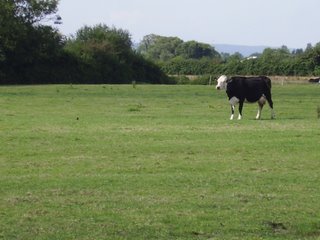
The day of the wedding itself kicked off with Dove being attacked by a cow. He’d risen early and wandered off down the meandering lane to get some supplies for breakfast. On the way back, he was ambling contentedly along a country lane, bordered on either sides by the ubiquitous hedgerows, and looking closely for hedgepigs (the quest for hedgepigs was one of the constants in our voyage). Suddenly he heard what I can only describe as a bone-chilling moo, and I’m pleased to think that you’ll never read that phrase again in your long-legged life. The cow-roar was accompanied by the sound of clattering hooves. Soon enough, around a bend in the road came a wildly cantering cow, and by his account, a cow with its hoof hard on the gas pedal is a deeply disturbing sight. It charged towards him, and a combination of shock, fear, and comic disbelief rooted him to the spot. Also, there were eggs in the shopping bags which might have been broken had he tried to jump a hedge. Just before it reached him, the cow veered to one side and he found himself alone again, with only the sound of a rapidly disappearing mad cow and a sense of unreality to accompany him. All in all, a nice way to start the day.


This comedy of errors continued when I noticed that Mockingbird had worn my contact lenses instead of his own. This wasn’t a problem for me, but since he was off somewhere driving around those narrow and perilous roads, I began to worry. Mine are about three or four times as strong as his. When he’d left to help set up the wedding, he’d commented on how filmy and blurred his vision seemed. To my shame, I’d told him (a new contacts wearer) that this wasn’t strange in the morning, when the eyes can take a while to adjust. These thoughts might have been ringing in his head as he barrelled through a crumbling wall on top of a picturesque bluff.


But that didn’t happen.

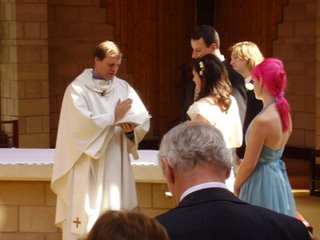
The wedding, of course, of course. Macaw and Starling were (and are) a gorgeous couple, as everyone remarked.

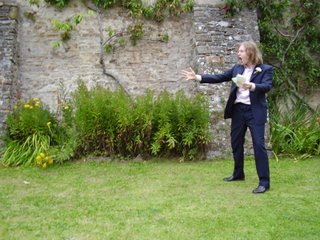
The ceremony was well attended, and the reception was unforgettable. Set in a green country estate replete with cows and goats, I danced with old people and children. This is always one of the joys of special occasions, though you’d never want to dance with old people or children at most other points in your life. There were speeches which managed not to be embarrassing or ill-judged, but instead came across as tender and aww-worthy (Mockingbird's best man speech wasn't as violent as the prep suggested):

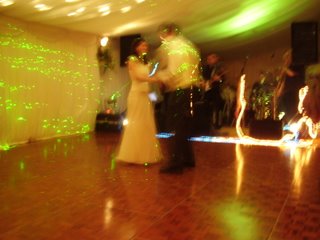
There were slightly drunken relatives whom I’d never met but who nonetheless welcomed me as a fellow countryman, and applauded the fact that the strange young Australians were the first on the dancefloor, and the last to leave - although really, we weren't the first, since the bride and groom cut some rug to warm things up, in accordance with tradition:

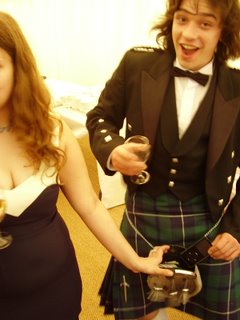
There was a Scot who kept his iPod in his sporrin.

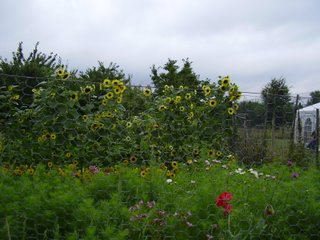
There were sunflowers:

And there were lots of people from Somerset. I’d never met someone from Somerset. They’re a breed apart.


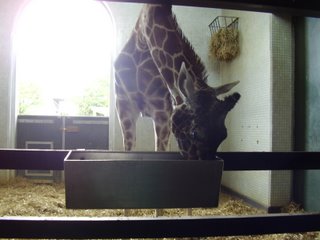
A day or two later, back to London, where Mockingbird left for Italy and Croatia and the rest of us stayed another night. I went to the zoo with Drake and Meadowlark (staying in London for a while). There were giraffes.

And the next morning I woke an hour and 40 minutes after my alarm went off and dashed madly across London to make it to my flight to Sweden.
Which doesn’t answer your question, does it? What am I doing here?

Sunflower (pt 2)

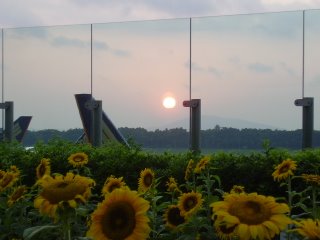
There’s a sunflower garden at Singapore airport. It’s worth a visit. Sunflowers don’t get enough play these days. They did on this trip. I saw a lot.


Coincidences have been on my mind lately. You let one in, the others follow. They pile up, crowding in at the door like noisy friends-of-friends at a party. Of course, they’re a fun bunch who know good dance moves so you don’t call the cops. But you do wonder – who are these crazy mixed-up kids?
The long leg of the Singapore to London flight takes around 13 hours, making it a tough one. Some people complain. Me, I can’t wait to relive those memories a dozen times per week for the coming fortnight at least. Reminiscing about long and uneventful periods of my life helps me avoid the difficult bits. That’s how into long flights I am.
By the time Dove and I made it to happenin’ Heathrow (the most Carnaby Street of airports (except not)), we’d been awake for about 40 hours each, unable to get more than a handful of hours of fitful rest on the plane. We met up with Kite, kind enough to take into her London home the slimy husks we’d become, looking as familiar with hygiene as the Mother Country is with dental plans, good coffee and respect for former convict-stock. Ah London, how I have missed your sun-dappled boulevards and grinning, fruit-proffering denizens!

As an-ex Melbourne housemate of Dove’s, Kite was very charitable in taking us in. I'd like to say that our appearance was "practiced disarray" but it was closer to "escaped mental patient". Nonetheless, we found a warm welcome up four flights of stairs (four flights from the smokers' courtyard, I should add).

We also found fellow Melbourne travellers Meadowlark and Mockingbird. (By now you might be wondering about the whole bird-theme with everyone’s names. Obviously, I’d prefer it if I was meeting a bunch of avian companions and acting like they was human, taking hilarious (if delusional) jaunts across the English countryside with my fine feathered friends until some quaintly-accented rural gent accidentally takes me down with his twelve-gauge and stands over me in head-shaking pity/scorn uttering words such as “twas ne’er meant fer man te cavort wi’ t’ birds so, aye” and my family to gather round my coffin clutching a feather in each hand. ‘Twas not to be, ladies an’ gents. The bird-words are merely to conceal identities, and also to produce a general bird-theme to this blog (note to self: keep thematics sublimated. Make the reader work).


London: We all went out for dinner and drinks at a few pubs near Kite’s. It was probably close to 48 hours we went without sleep, Dove and I. Waking up at 6.30am this morning on the cosy loungeroom floor, well, it felt like coincidence and randomness were far away. In the warm, still, nearly soundless hush of the old inner-London terrace, I ambled around making myself coffee, looking at pigeons and flat grey skies, feeling safe in an orderly and unsurprising universe.


Of course, coincidences aren’t always alien to such environments, and are often less than dramatic. Some examples: on the Singapore to London flight, I’m watching Tom Cruise grimace his way through Mission Impossible III. I’m not surprised that Tom’s on-board in this way. You don’t get more captive than this. I’ve joined that all-important demographic of “people who oughta know better, but don’t,” and Tom’s accountants are establishing their kids’ college trust funds on that fact. It’s the perfect flick for a half-attentive plane trip, and I’m able to dip in and out of alertness as I’m served food, check the time till arrival, and so on.
At one point my gaze drifts to the screen of the passenger to my left, and I find my neighbour is watching Cruise in The Firm. To my right, my other neighbour is watching Cruise in Days of Thunder. Flicking through the inflight magazine, I see we have 80 films to choose from, plus dozens of tv shows and documentaries. Still, for some reason we’ve managed to accidentally inaugurate the first ever Tom Cruise Midflight Film Festival, without any conferring on the matter. Which I find funny.
Stranger, though, is the moment when Tom kisses his wife in MI3 and spins her around in a lovely cinematic classic shot. At precisely this moment, I catch Tom pulling the same move in Days of Thunder, the camera twirling around Tom and Nic exactly the same way. It’s uncanny, double vision, and I’m startled by the apparent coincidence, since I'm not nearly drunk enough to make sense of it. After all, it’s not that an on-screen kiss is that rare, or even that the shot mightn’t be one that Tom loves to demand in a film. But the chances that both myself and a neighbour would start our films at the correct moment to synchronise the two kisses would seem pretty slim.


But that’s the way coincidences work, right? The chances of that occurrence taking place are a million to one at best, but the chance of something equally unlikely happening, anything at all, is almost 100%. The number of strange, nearly inexplicable things that could potentially occur in our lives is limitless, so we’re not that often shocked when they do. It’s kind of what I enjoy most about travelling like this – I have no idea what possibilities might befall me, scary or hilarious or enlightening or wearing an outrageous hat, but I can be reasonably sure that unforeseen and highly unlikely events of some sort will be likely and foreseeable. Is it coincidence that will lead me here?

A final example on this kind-of boring point. My aforementioned flight neighbours and I were sitting in business class. Anyone who knows me would know that I could not afford and would not shell out for anything more than a crappy economy class seat surrounded by smelly whiny-voiced strangers who are all elbows. By a bizarre coincidence, though, I received that legendary thing spoken of only in reverential whispers, the first thing people dream of when they plan to take a flight: a pair of complimentary plane socks. I also got an upgrade. I’d like to offer a recipe for upgradification, but my good fortune came down to this: somewhere in business class was another passenger with my name, middle initial and all. When the airline was allocating seats, it couldn’t tell which one of us had paid for business, so we were both given the sweet seats up front. I wasn’t complaining (and I know what you're asking - were my first words "stop your fussin' and get a-bussin'!" I'll never tell, but yes, there were! (Or weren't)). And of the 20 or so other passengers seated in my section, I never did work out who my namesake was. The chances of our sharing a flight and name are, surely, astronomically remote, but like I’ve been trying to say (lord, are you even listening to me? Jeez.) most things that happen do so against astronomically remote odds. What are the chances that a bunch of molecules will make their way across the universe over millions of years and get together to have a big multi-decade long knees-up named you? What are the chances that we’ll be born, grow up, develop faces, not be murdered by circus folk, fall in love or out of a car, understand the faintest thing we hear and be as children amazed by the complexity of everything that happens?

All I say is: thank you John M. Bailey, business class traveller. I’m pleased to wear your shoes for a day. You’re not touching my complimentary plane socks, but.

Friday, September 29, 2006

Pasta Shapes (pt 1)

The first rule of blog creation is "make it entertaining", a step up from the first creative rule I learnt in primary school which was more like "make it out of pasta shapes glued to coloured cardboard." I don’t know how entertaining these travel posts will be, though, but I hope they mean something to the people who actually know me. To the rest of you, feel free to request pasta shapes.

Fear of terrorism really needs its own term, doesn’t it? After all, the fear inspired by a bag left unattended on the tube isn’t that same sharp pang brought on by a stranger stepping out of a dark cobblestoned alley, or a sudden crash waking you from a deep sleep. There’s no keen-edged adrenaline ignition when the chirpy morning newscaster in London offer reports of the Pakistan-born woman detained at Heathrow yesterday. When a steward comes over the intercom during our flight to ask for the owner of the mobile phone found in the bathroom, the mind begins to dread, not panic. Though terrorist acts may occur suddenly, the fear of terrorism has little to do with abruptness. Terrorism seems more about waiting.When I was 20, I was forced to wait at Singapore’s Changi Airport for 14 hours. My connecting flight to Melbourne was delayed, then delayed again, and then again. I had no money, so I couldn’t pay the 15 bucks required to leave the airport itself, and obviously I couldn’t afford a book or anything to pass the time (food, too, was out of the question, so the slow gnaw of hunger kept me company most of the time). Anyone familiar with airports will know that they’re all about waiting, but you need to find something to keep you occupied. By the time I realised I was in it for the long haul, I had begun measuring out things like bathroom stops: taking a trip to the toilet became as exciting as a visit to Coney Island, and I would wait as long as I could to savour that thrill. A trip on one of the 100 ft long travelators was like a rollercoaster of fun, and the newsagent was a forbidden joy, since I could only spend a few minutes of browsing magazines before someone would ask if I was there to buy.This was a decade before 9/11. My waiting was contained, safe, and bound by the implicit knowledge that public spaces like airports or shopping centres were tightly controlled by security and surveillance. Wondering was limited. I knew my flight would eventually take me home. Waiting was about delay, but I never doubted that I’d make it back in the end.Waiting at Tullamarine for a flight to Sydney a few weeks ago was a different matter. I sat scanning the faces of the other travellers, business commuters mostly. The staring, sweaty face of a man fidgeting with the strap of his case, or the hard-eyed middle-aged woman with the carefully avoiding gaze; our waiting took on new dimensions of meaning. Nobody expected anything untoward to occur, but the possibility lingered, floated above us.Terrorism is all about waiting. We all know, or are told that something devastating will happen somewhere, at some time, but there’s nothing we can do about it. It probably won’t happen to us, but will happen to someone like us, like us in our insignificance, that is. And it’s out of our control. It strikes me that this dread is akin to more common, less dramatic situations. Love and affection, for instance. Not knowing whether this will last, whether it will all come crashing down or whether the detonation will be stayed another day. Waiting, of course; waiting to take action but knowing that the decision to flick the switch is not yours. Left plucking daisy petals, pretending assurance can be found in random signs, but knowing nonetheless that the waiting is bigger than you, is some way defines you.In this way, we are in a terrible, typical and unendurable life. All flights have been delayed indefinitely.

In the meantime, if you're already turned off by the lack of Jean Claude in the trip so far, this is pretty much a summary of the rest of my time overseas. Especially the guy at the start.

My Euro Trip


Wednesday, September 27, 2006

The Players

So, I've been pulling together the notes I made during my recent Ill-Advised Adventures in European Sojourning and am almost ready to post them up. So, for those coming here looking for half-baked arts commentary, you'll have to come back later (maybe in a week). Those looking for 'uncontrollable nerve shocks', sorry I couldn't help (unless I did). To the person who translated my page into (presumably) some kind of Hispanic language using an online service: impresionante! Everyone else, fasten your seatbelts as we put it into first gear and begin to edge this baby out of the driveway, looking both ways (twice)! ROCK!

THE PLAYERS
JACKDAW
DOVE

MOCKINGBIRD

MEADOWLARK

KITE

DRAKE

LYREBIRD

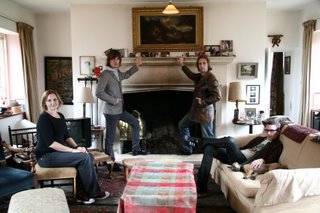
AND THE GORGEOUS COUPLE

STARLING...


...AND MACAW

Wednesday, September 20, 2006

Everybody Loves Raymonda


I'm currently held hostage by a particularly threatening bout of jetlag, and those who've done the London-Melbourne 24-hourer will know the mental quicksand one's brain must wade through to come up with a coherent sentence post-return. I was hoping last night's opening of the new Australian Ballet show Raymonda would be a rip-cord to yank me up out of this, but alas, it wasn't quite the case. One thing is certain, though: it really does live up to its name, most definitely featuring a character named Raymonda.

It turns out that this particular number was first created way back in 1898, when cavemen were just discovering fire. You wouldn't know it from this production, however; guest choreographer Stephen Baynes has turned the original into a homage to Grace Kelly and the Golden Age of Hollywood. It's an easy fit: the screen goddess of the title becomes engaged to a handsome European Prince, goes to live in his lovely land (with notably less casinos than Monaco, though) but has doubts on her wedding night and dreams about dancing with hot dudes in sleazy bars. Pretty much your average kitchen sink drama then, you know, like a Ken Loach film or something.

But I was disappointed to find that it didn't live up to all the hype. I mean, I was really looking forward to this. The pre-press sounded great, and the whole Hollywood angle had me about as excited as if they'd said the next AB production would feature giant robots duking it out over Tokyo.

The cast were excellent, especially Kirsty Martin as Raymonda, who actually creates a character and delivers some expression and an emotional journey. Ray also being played by Lisa Bolte and Rachel Rawlins, and I would have liked to see Rawlins give it a burl since she really impressed me in La Sylphide.

The set was gorgeous, but there just wasn't enough of it. Often, we were given a few items of furniture and a simple backdrop, but that's it. Where were the lavish, glittering spectacles of The Sleeping Beauty or La Boheme? I guess this Prince was from one of those countries where the monarchy is just a lingering bunch of old freaks who still think people care that they're alive (like England or something).

The lighting was impressive, especially when Ray wakes up after her long, luscious dream (and as an aside, there was a genuinely funny moment when new hubby finds her sleeping and notices the empty liquor bottle next to her, giving a look which jovially suggests "Whoops, wifey's got substance abuse issues! Didn't see that coming!"). And costumes were fine, and music and stuff. But I didn't feel there was enough of anything here, the show going for subtlety and delicacy over big impact showstoppers.

You know, I suppose that's not really a criticism, is it? But when you're desperately trying to stay conscious and aware that your body thinks it's 12 hours past bedtime, subtlety and delicacy just don't work. Still, everybody else loved Raymonda.

Now when I get a chance, I'll be posting some stuff on my trip, just for friends and not the casual reader such as yourself who got here looking for pictures of Jean-Claude dancing or the tablature to Hello Dolly or the lyrics of a certain George Michael song.

Sunday, September 10, 2006

A Salzburger with Fries

Just a quick update to let readers know that I'm alive, reasonably well (apart from a cold that has come from nowhere), rather poor, lightly tanned, cleanly attired, perpetually confused, occasionally lost, constantly tired but never hungry, pleased to have found a cheap internet cafe but reluctant to stay long due to the atmosphere or lack thereof, pleasantly housed and soon to be homeward bound. Where in the world is Born Dancin'?

Here's a hint: the hills behind me are, I'm positively informed, alive with the sound of music. Also, for some reason, blunderbusses, fired by a squadron of men in green felt hats and lederhosen at 11.45 this morning. No idea what was going on there, but just to be safe I'll be staying on the right side of the law until I leave on Monday. Then it's back to London for a few days and home again, where I'll be able to post what I've written on this trip and haven't had time to type.

Until then, I'll be cycling around this beautiful town and climbing every mountain (I've been up a few so far) and singing to myself in an effort to stave off madness (and beggars).